
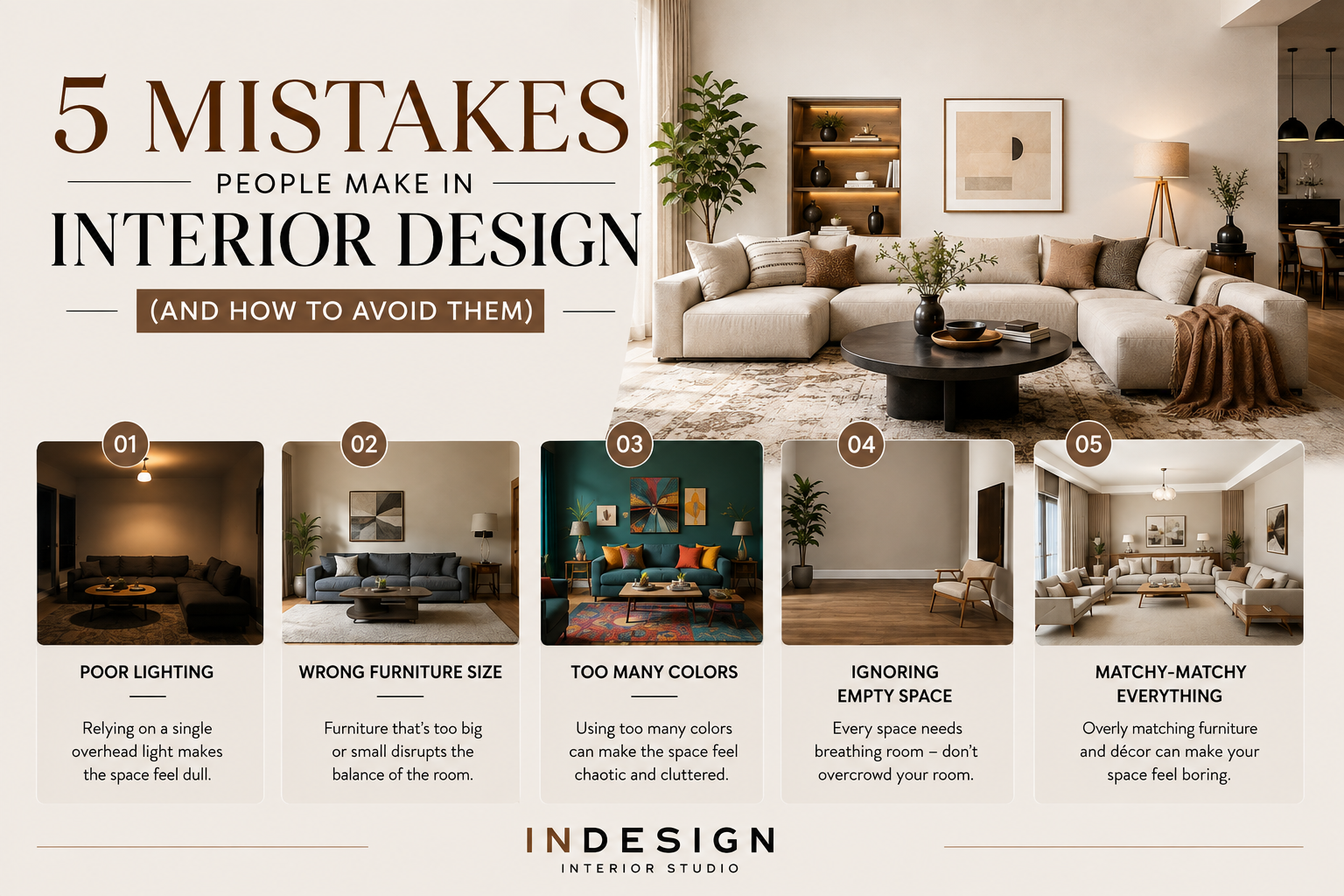
5 Mistakes People Make When Designing Their Home (And How to Avoid Them)
[Your Business Name] — Interior Design
Over years of working inside people’s homes — and their heads — we’ve noticed the same handful of missteps come up again and again. None of them are about taste. They’re about process. Here’s what we see most often, and what to do instead.
1. Buying Furniture Before There’s a Plan
It’s tempting to fall in love with a sofa and build a room around it. But without a floor plan, a lighting strategy, and a sense of how the whole space will flow, that one gorgeous piece can end up fighting everything around it. Start with the bones of the room — layout, light, proportion — before you shop.
2. Matching Instead of Coordinating
A living room where every piece is the “same style” often ends up feeling flat, like a showroom rather than a home. The most interesting spaces mix eras, textures, and finishes with intention — a vintage rug under modern furniture, a sleek light fixture over a worn wood table. Coordination is about relationship, not repetition.
3. Underestimating Lighting
Lighting is one of the most under-budgeted parts of a design project, yet it changes a room more than almost anything else. A well-lit space with average furniture will always outshine a beautifully furnished room lit by a single overhead fixture. Layer your lighting — ambient, task, and accent — and the room does half the work for you.
4. Designing Room by Room Instead of Home by Home
It’s natural to tackle one room at a time, but without a whole-home perspective, styles can drift and clash from doorway to doorway. Even if renovations happen in phases, having an overarching design direction keeps the home feeling cohesive as it comes together.
5. Waiting Too Long to Bring in a Designer
Many people assume a designer is only for the final styling touches — the pillows and the art. In reality, the earlier a designer is involved, the more value they add: guiding layout decisions, preventing costly mistakes, and making sure the big investments (kitchens, built-ins, flooring) are right the first time.
Good design isn’t about perfection — it’s about intention. If your space feels like it’s missing something but you can’t quite name it, that’s usually a sign it’s time for a second set of eyes.